
01
Revealing the exhibition design
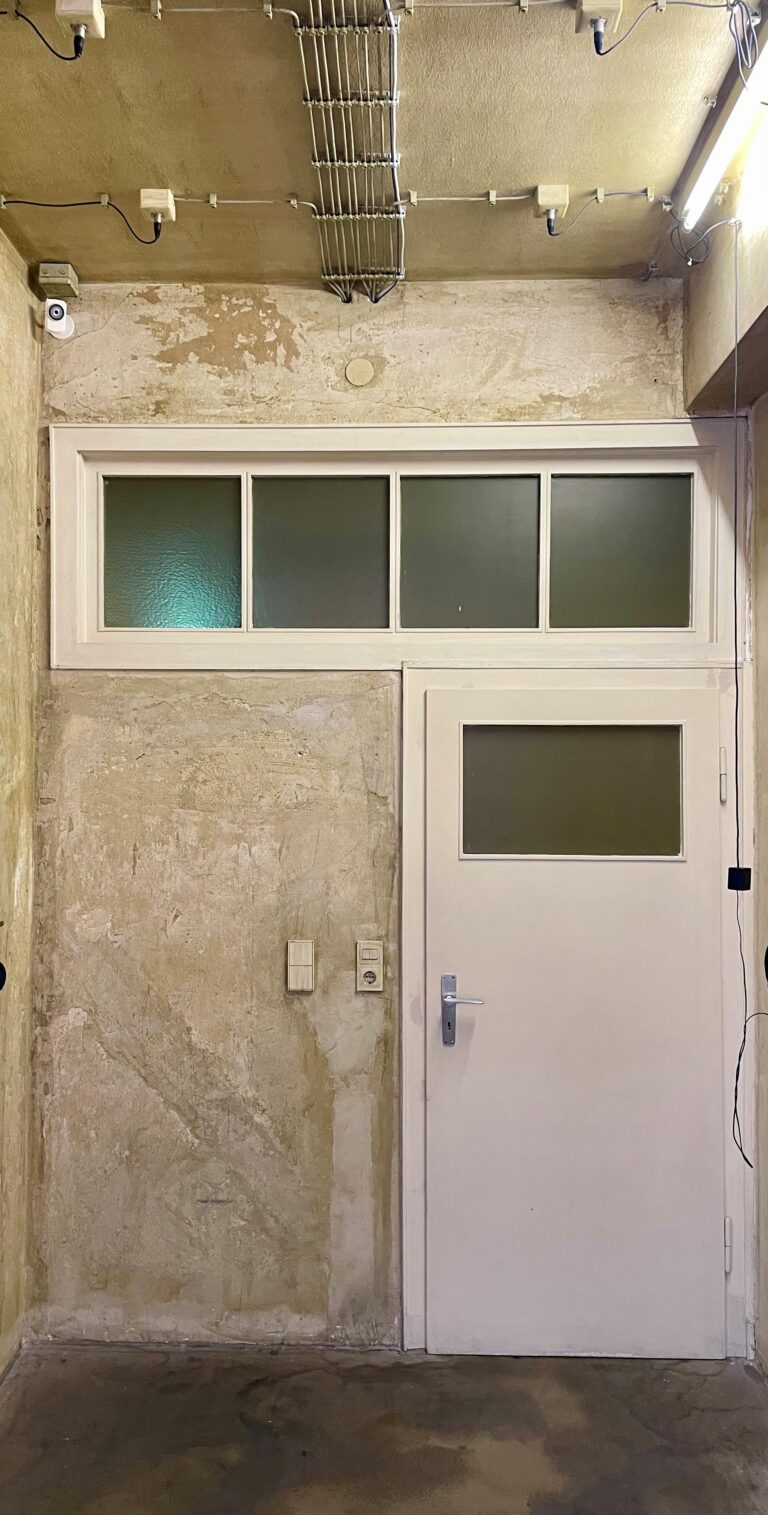
We would like to ask you something right at the beginning of the exhibition.
We will do the same at the other stations and, after you vote, show you how previous visitors have responded. Your answers will be directly included in the overall results.
Do you think that the offices of the Gestapo during the Nazi period looked more or less the same as they do today?
Here’s what you said:
What do you base that on?
You can choose multiple answers.
Because of the
Several features in the exhibition rooms actually come from the 1930s, such as the doors and interior windows. After 1945, the Cologne city administration used the building and changed some things. Other elements, such as the walls and the floor, were first changed in the 1990s for the exhibition.
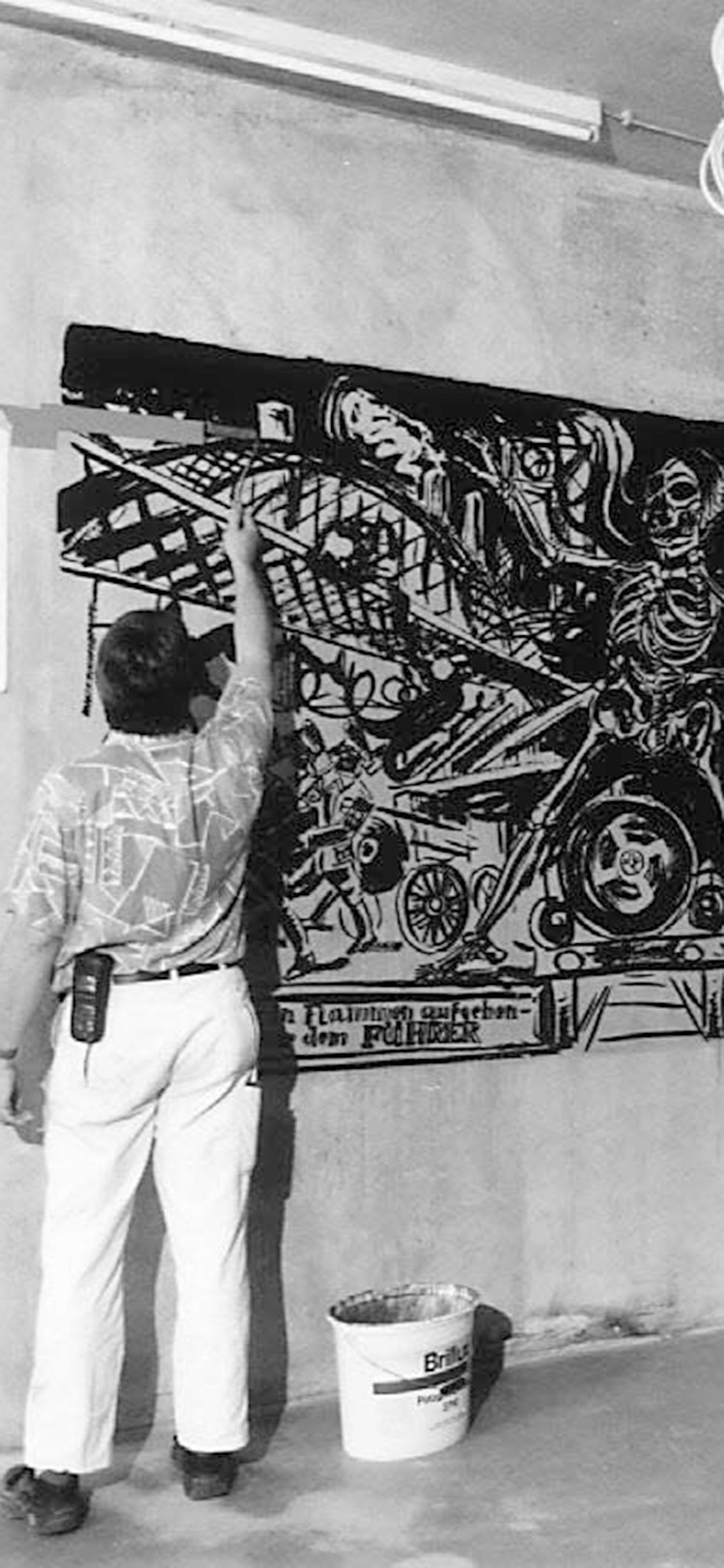
To set up the permanent exhibition at NS-DOK, the curators and designers applied a yellow glaze to the walls, giving them a sort of ‘unfinished’ look. This may give the impression that the rooms looked the same or similar during the Nazi era. But the walls of the Gestapo headquarters were probably whitewashed.
Along with the staging of the space – like the glaze used here, for example – the design of the exhibition itself is also supposed to have an impact. The way exhibitions on National Socialism are designed constantly changes. Until the 2000s, many curators, including at the NS-DOK, chose a design language that evoked National Socialist symbols: for example, the German imperial colours black, white, and red; Fraktur script; or exhibition furnishings that brought to mind pennants and flags.
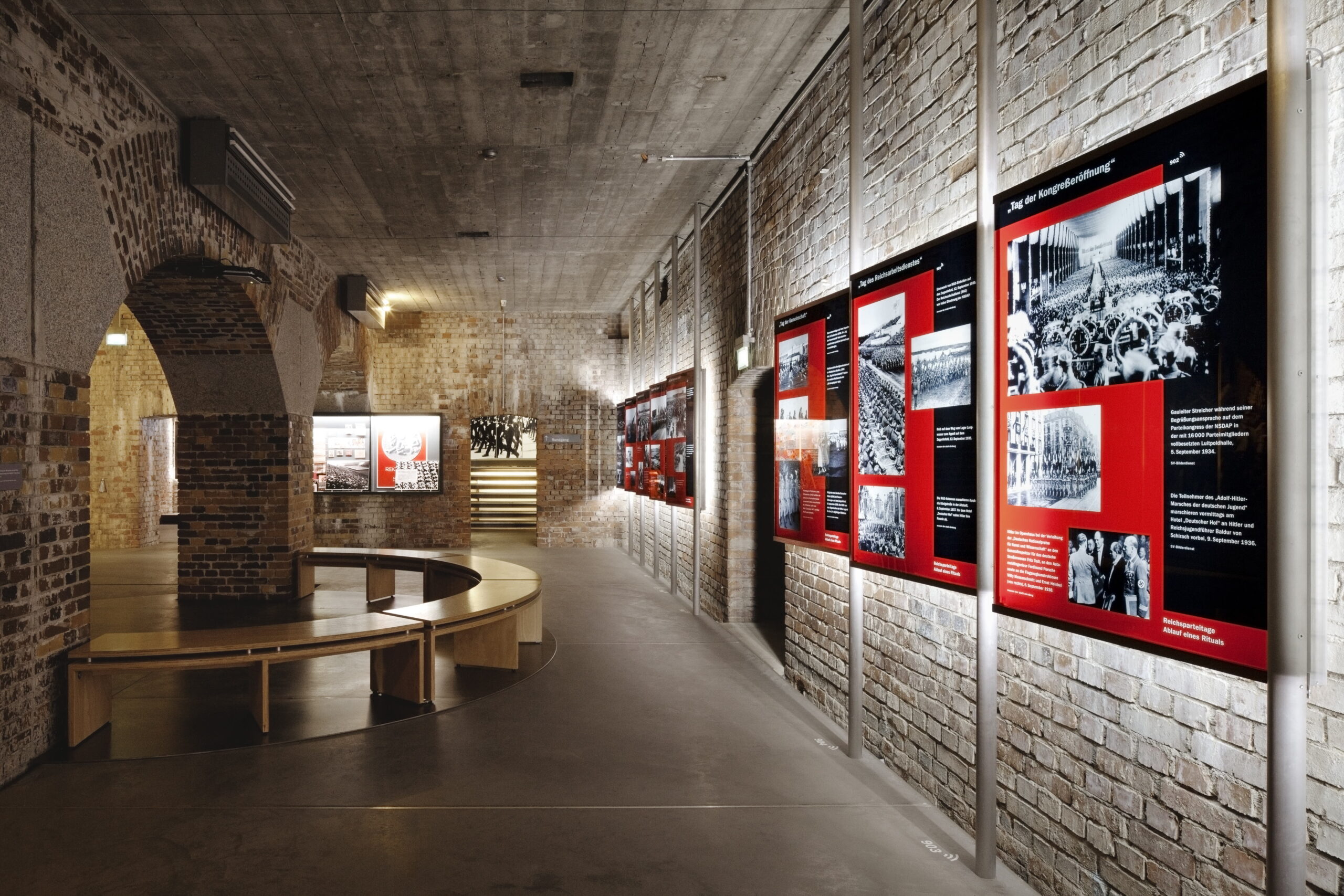
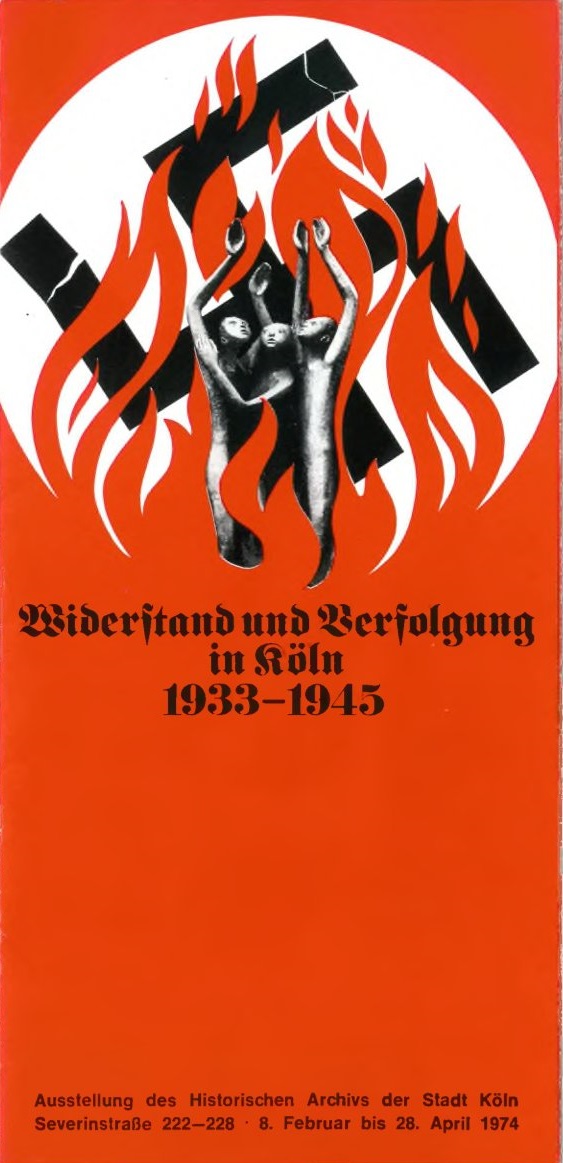
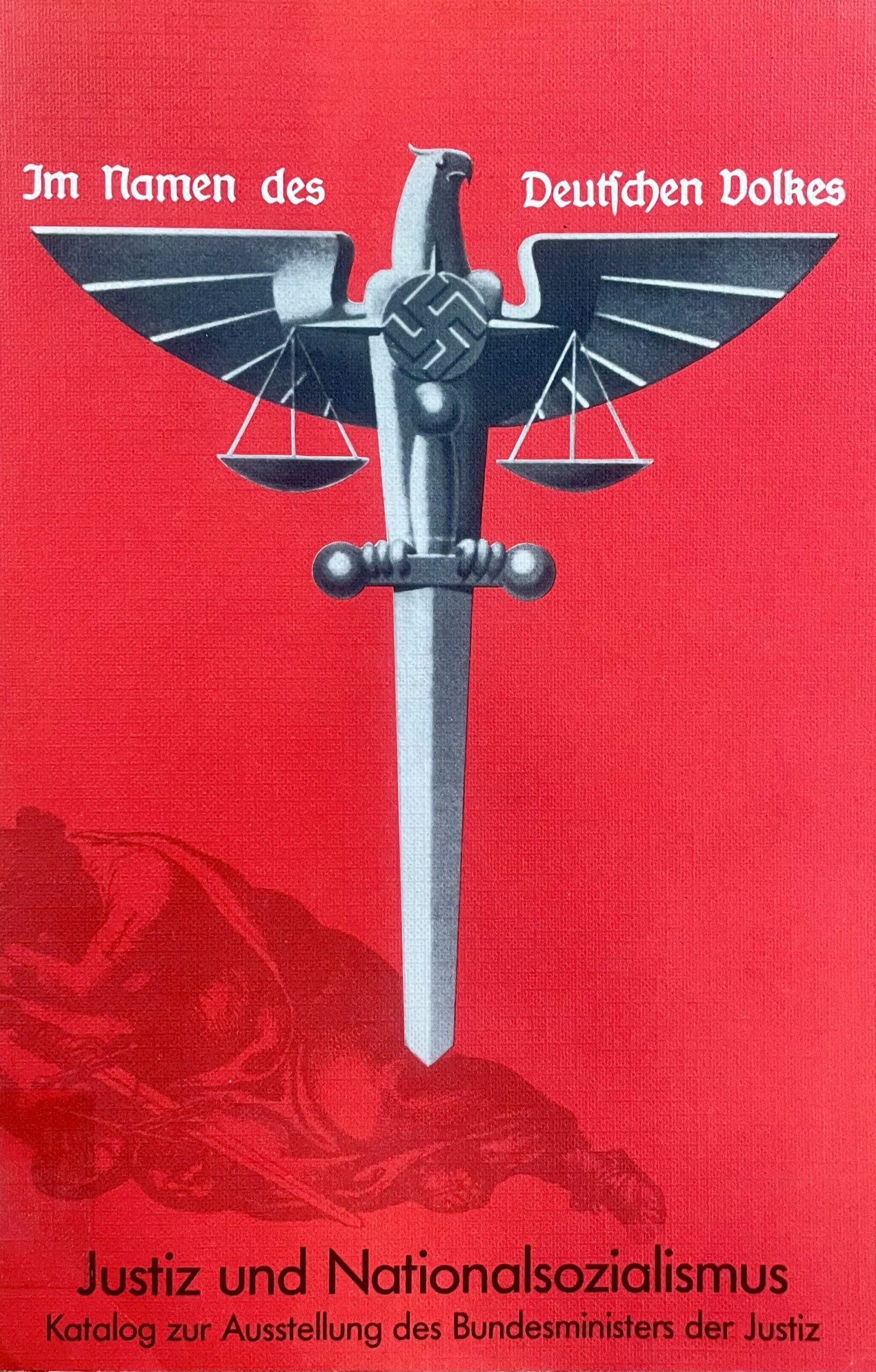
A few years later, many criticised this approach – not least because the radical right to this day uses the German imperial colours and Fraktur script to express their rejection of democracy. As a reaction, starting in the 2000s, curators proceeded to keep their exhibitions on National Socialism as sober and neutral as possible: they became grey.
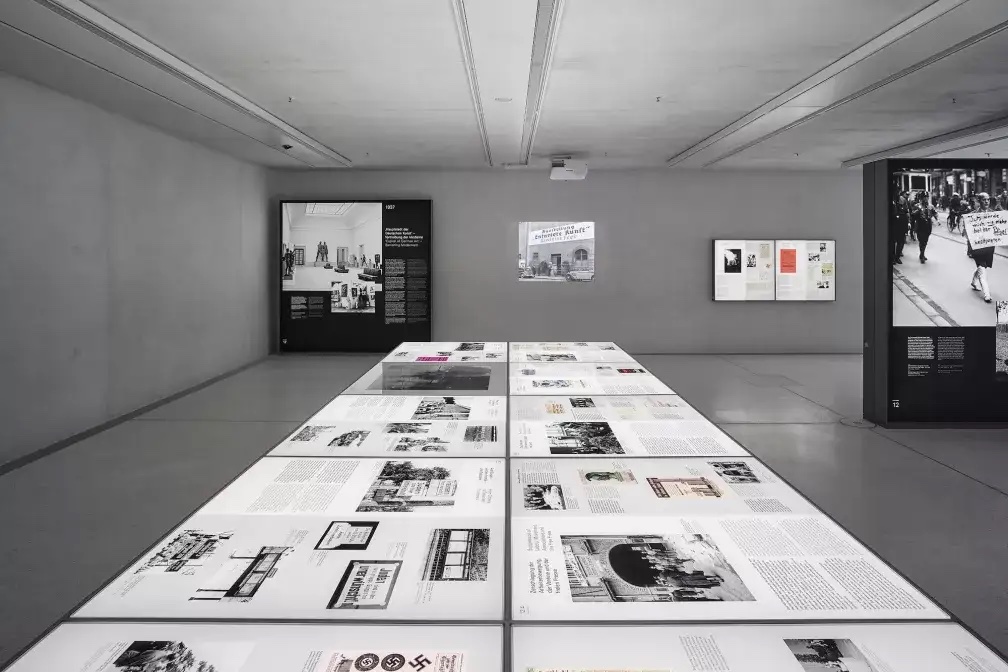
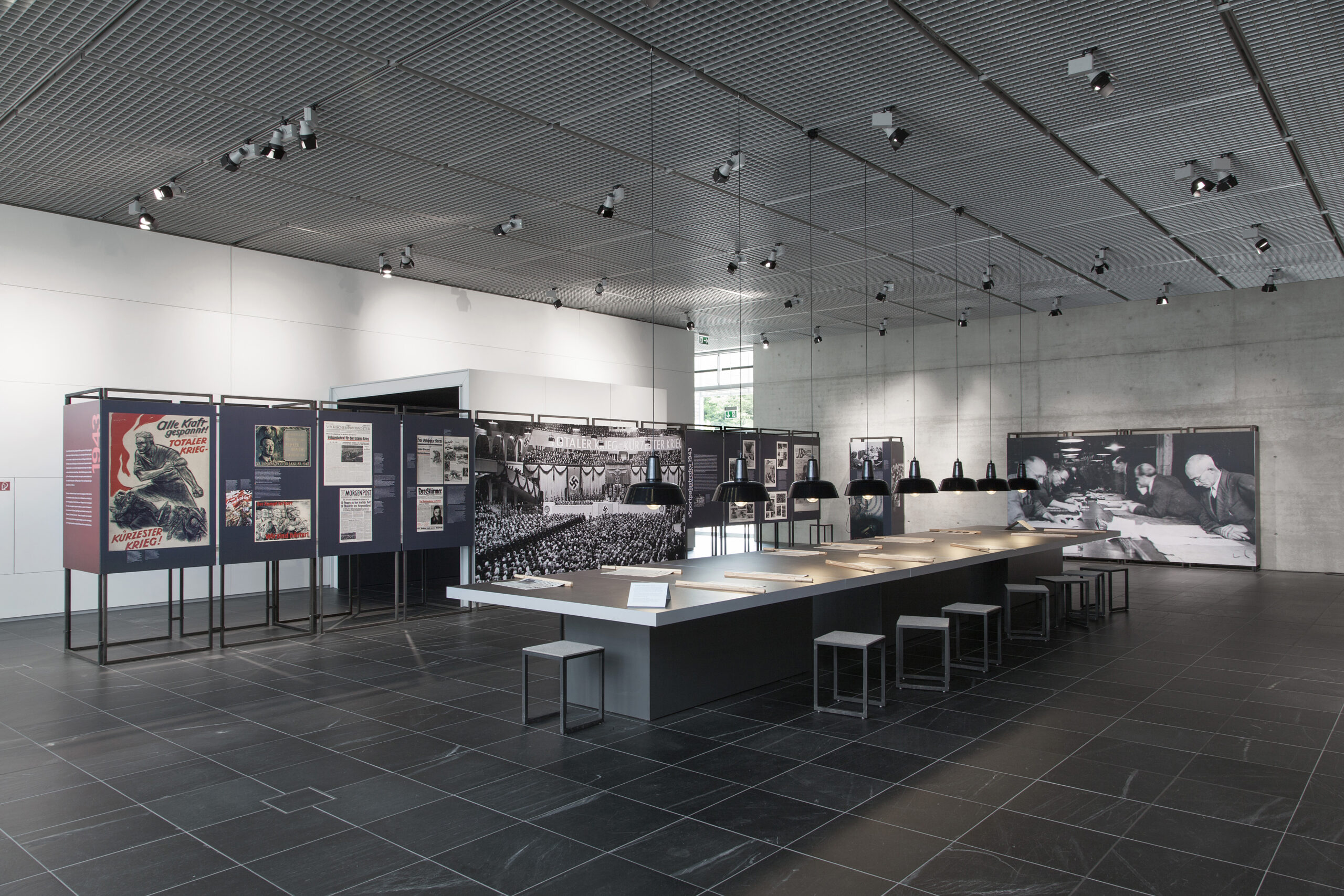
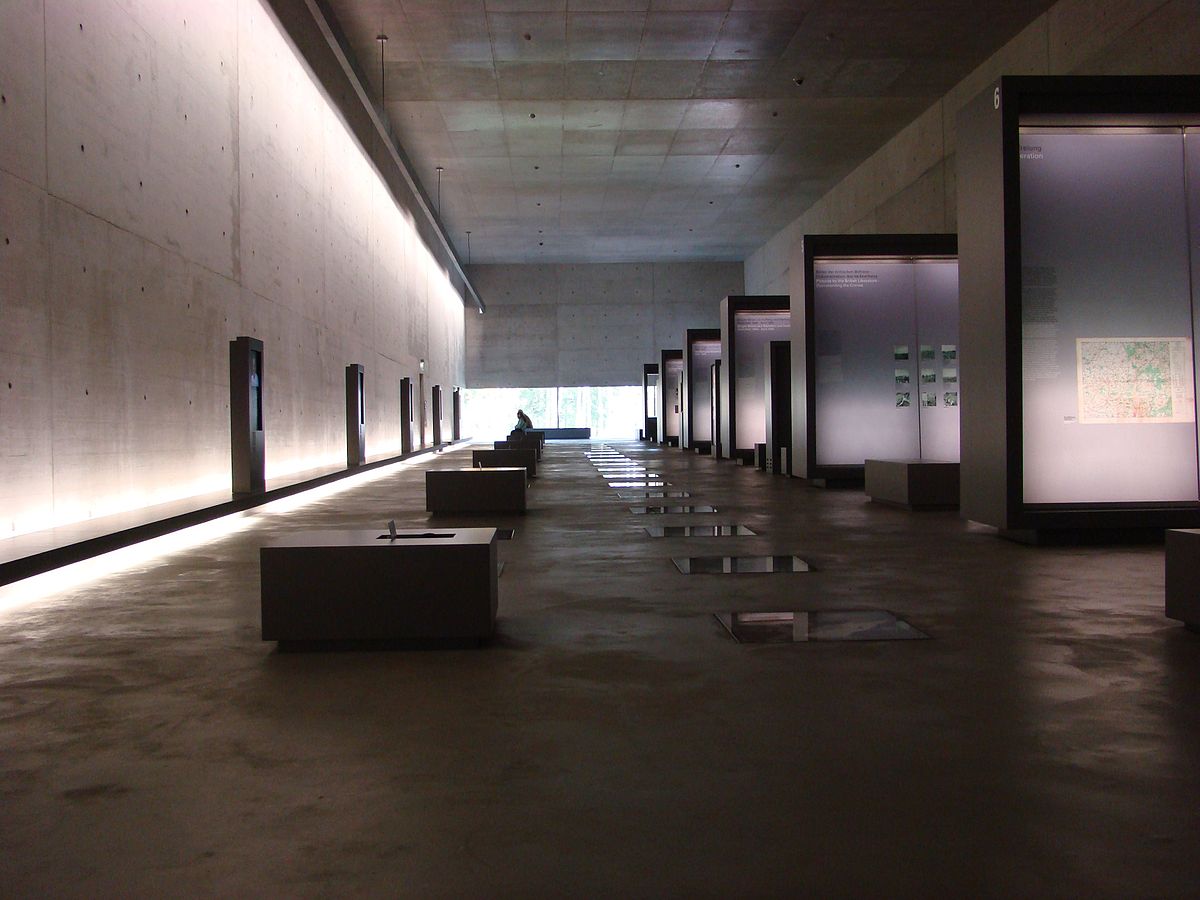
For several years now, many memorial sites have returned to using strong colours, which, however, have no specific connection to National Socialism. They are intended to create a welcoming atmosphere and encourage visitors to engage with what is on display.
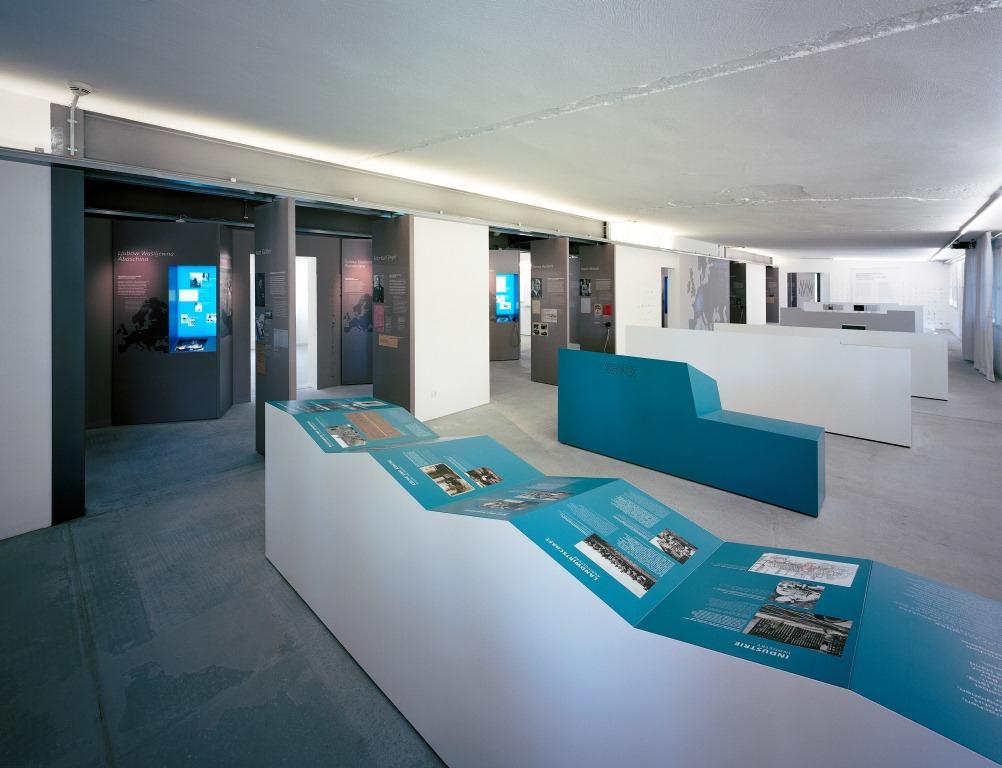
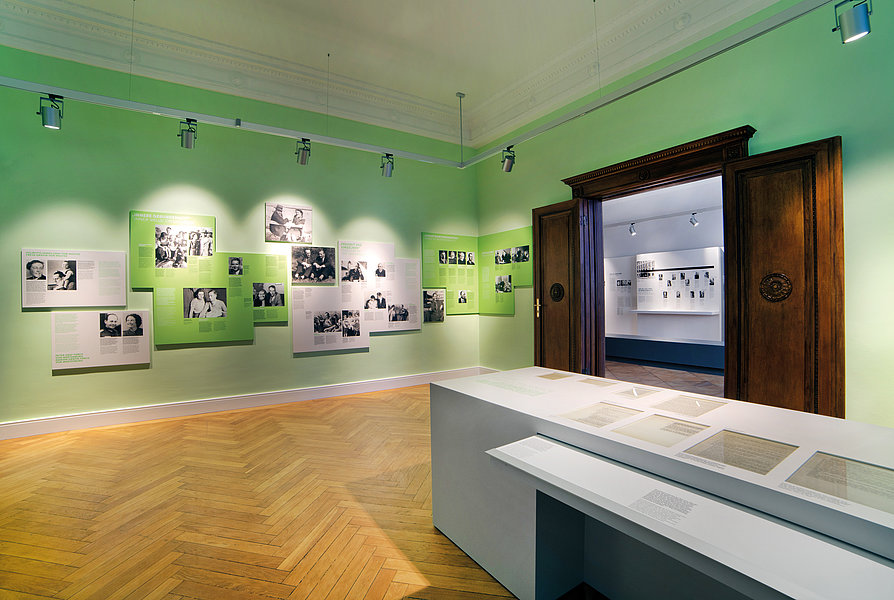
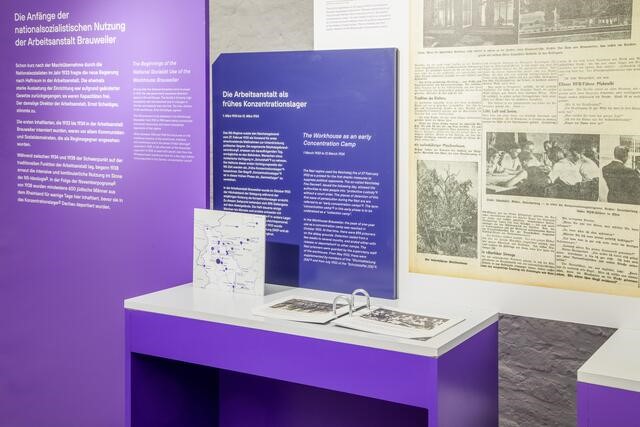
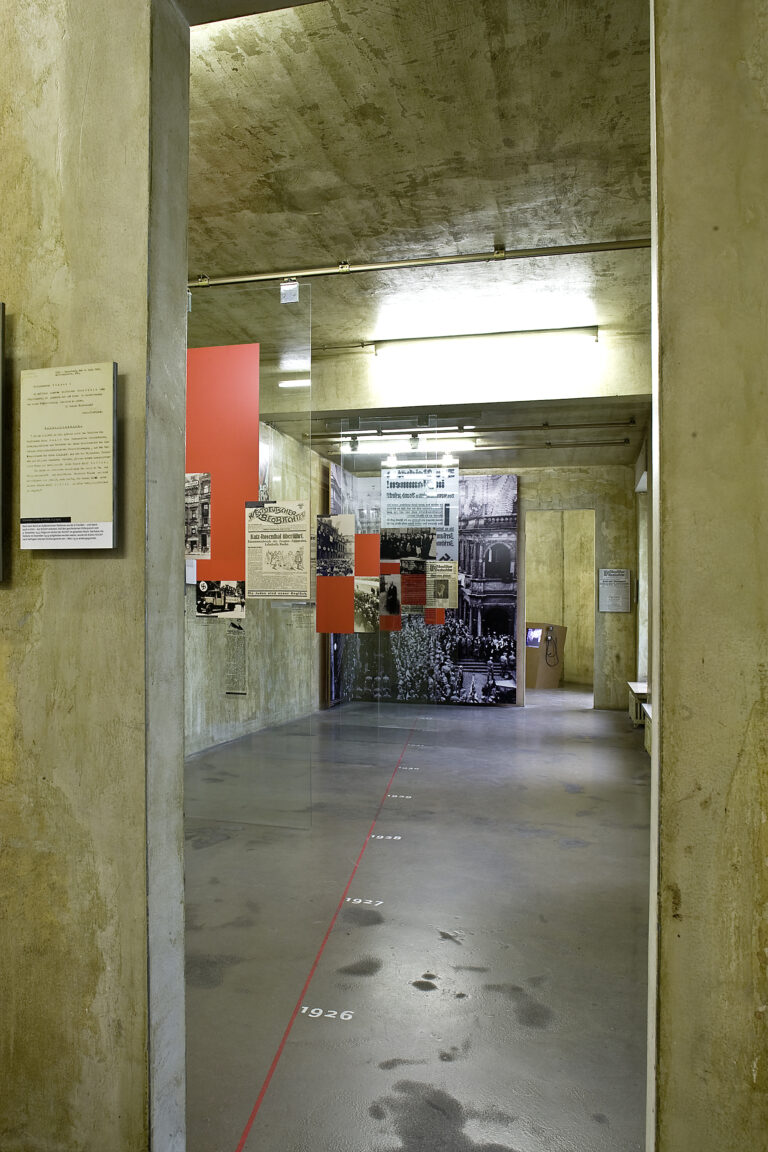
Whether supposedly neutral or deliberately ‘modern and colourful’, room designs and exhibition layouts convey moods and messages. Sometimes they are easy to decipher, but often they remain unspoken.
Take a look around! What effect does this room have on you?
You can give multiple answers.
Here’s what you said:
Thank you for your interest. You will find the next station two rooms further on.
Credits:
1. © private; 2. © Rheinisches Bildarchiv L 14911/5; 3. Documentation Centre Nazi Party Rally Grounds in Nuremberg, 2001 © Stefan Meyer / Documentation Centre Nazi Party Rally Grounds in Nuremberg; 4. Flyer for a 1974 exhibition on resistance and persecution in Cologne from 1933 to 1945, 1974 © NS-DOK; 5. Catalogue for a touring exhibition on justice under National Socialism developed in 1989 © Wissenschaft und Politik von Nottbeck, Köln; 6. Munich Documentation Centre for the History of National Socialism © Munich Documentation Centre for the History of National Socialism, photographer: Connolly Weber Photography; 7. Topography of Terror Documentation Centre in Berlin © Natalie Toczek; 8. Bergen-Belsen Memorial © photographer: Hajotthu; Wikimedia Commons, license: CC BY-SA 3.0; 9. Nazi Forced Labour Documentation Centre in Berlin-Schöneweide © Nazi Forced Labour Documentation Centre, Volker Kreidler; 10. German Resistance Memorial Centre in Berlin © German Resistance Memorial Centre / Georg Engels, Ulm; 11. Brauweiler Memorial © Vanessa Lange (LVR-ADR)