
09
Rethinking language
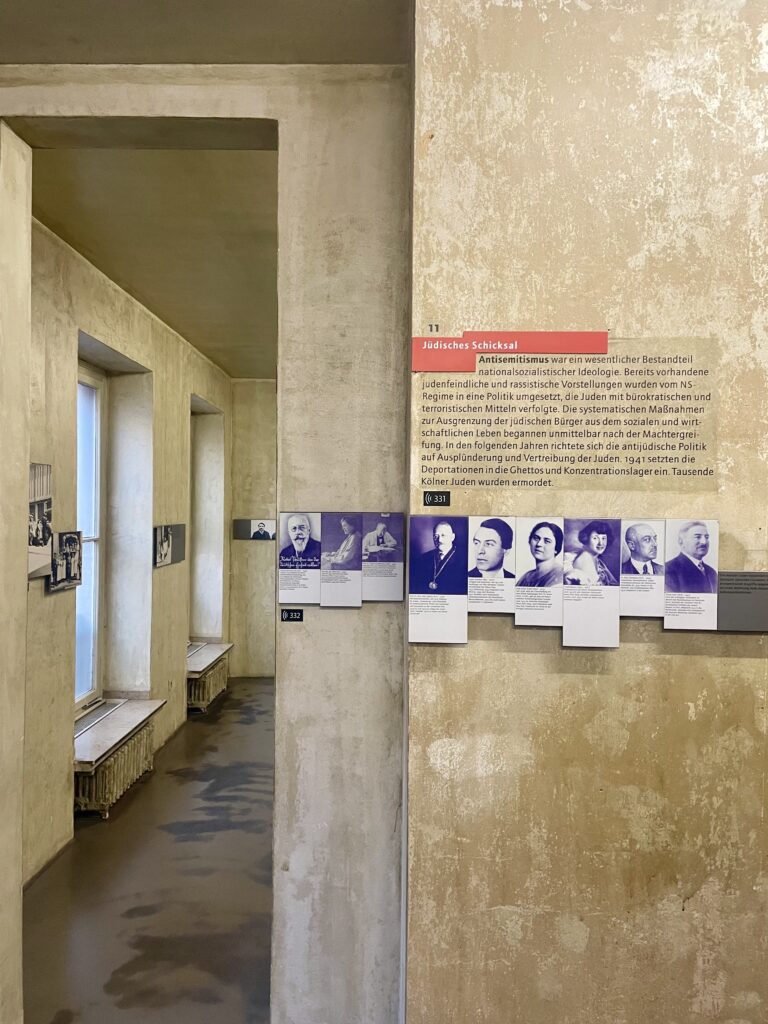
Described here and in the next few rooms is how Cologne’s Jewish community was gradually stripped of its rights, ostracised, and persecuted, which culminated in their systematic extermination – the Shoah.
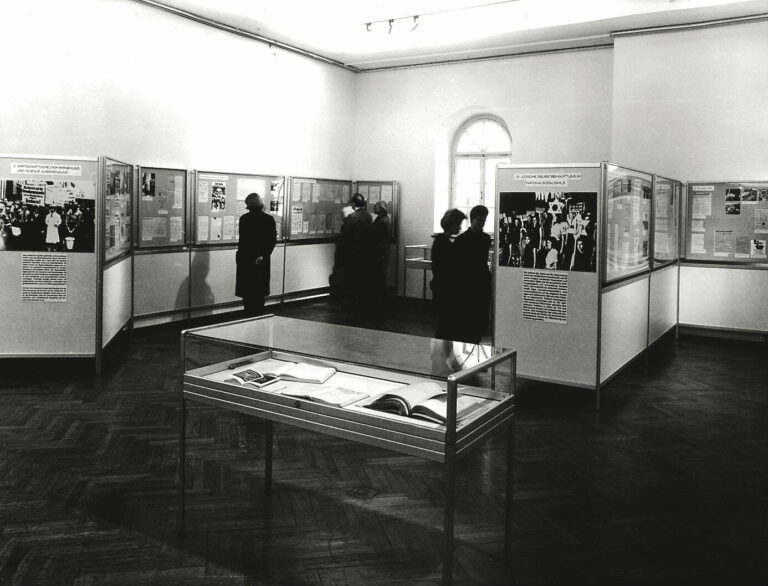
The room is entitled ‘Jewish Fate’. It dates back to an earlier special exhibition by NS-DOK on the persecution and murder of Cologne’s Jewish community, which was shown at the Cologne City Museum in 1988 on the 50th anniversary of the Night of Broken Glass (Reich Pogrom Night).
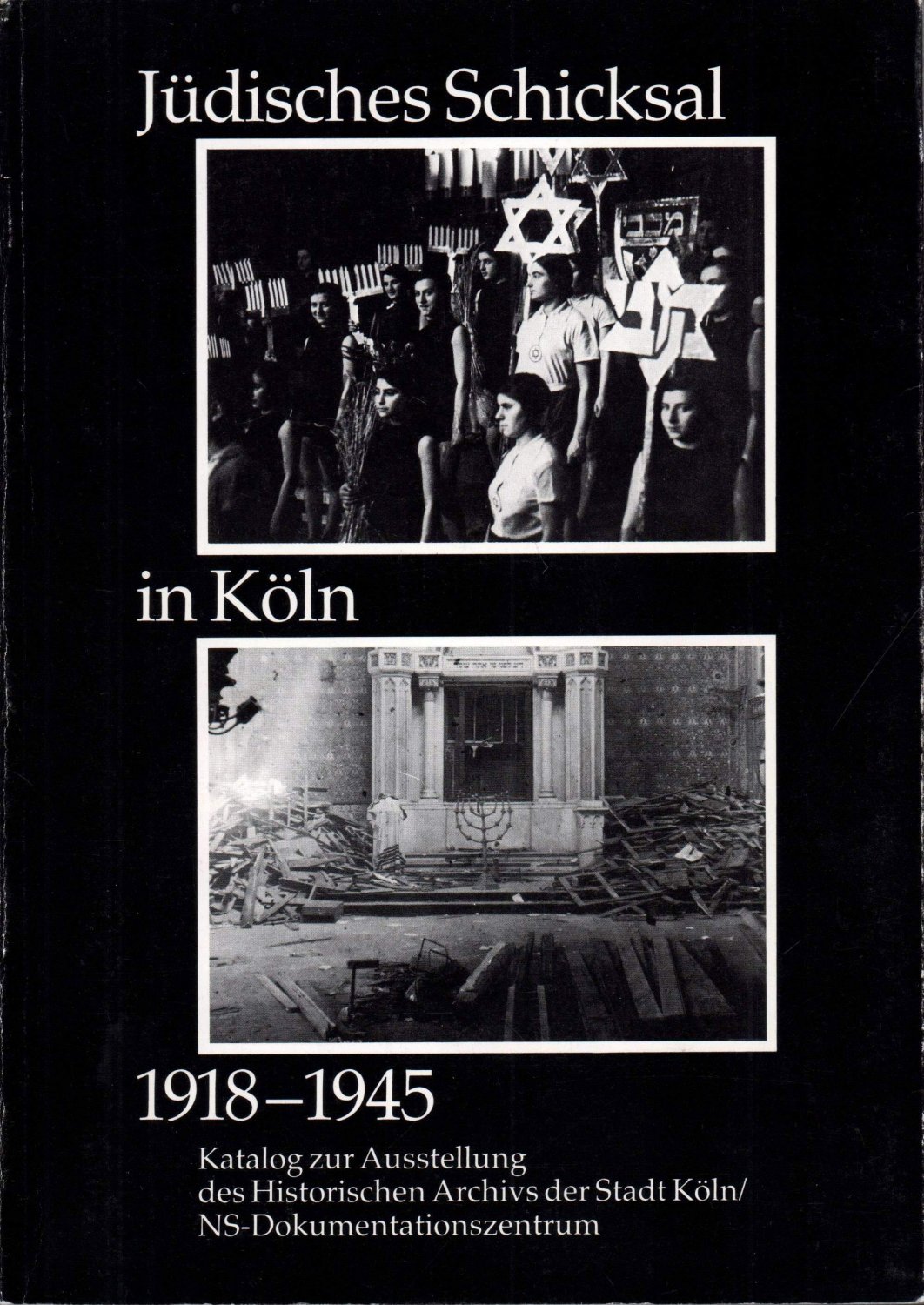
Unlike in English-speaking countries, the term ‘fate’ is often used in German to describe the Shoah. There are only a few examples of such usage in English.
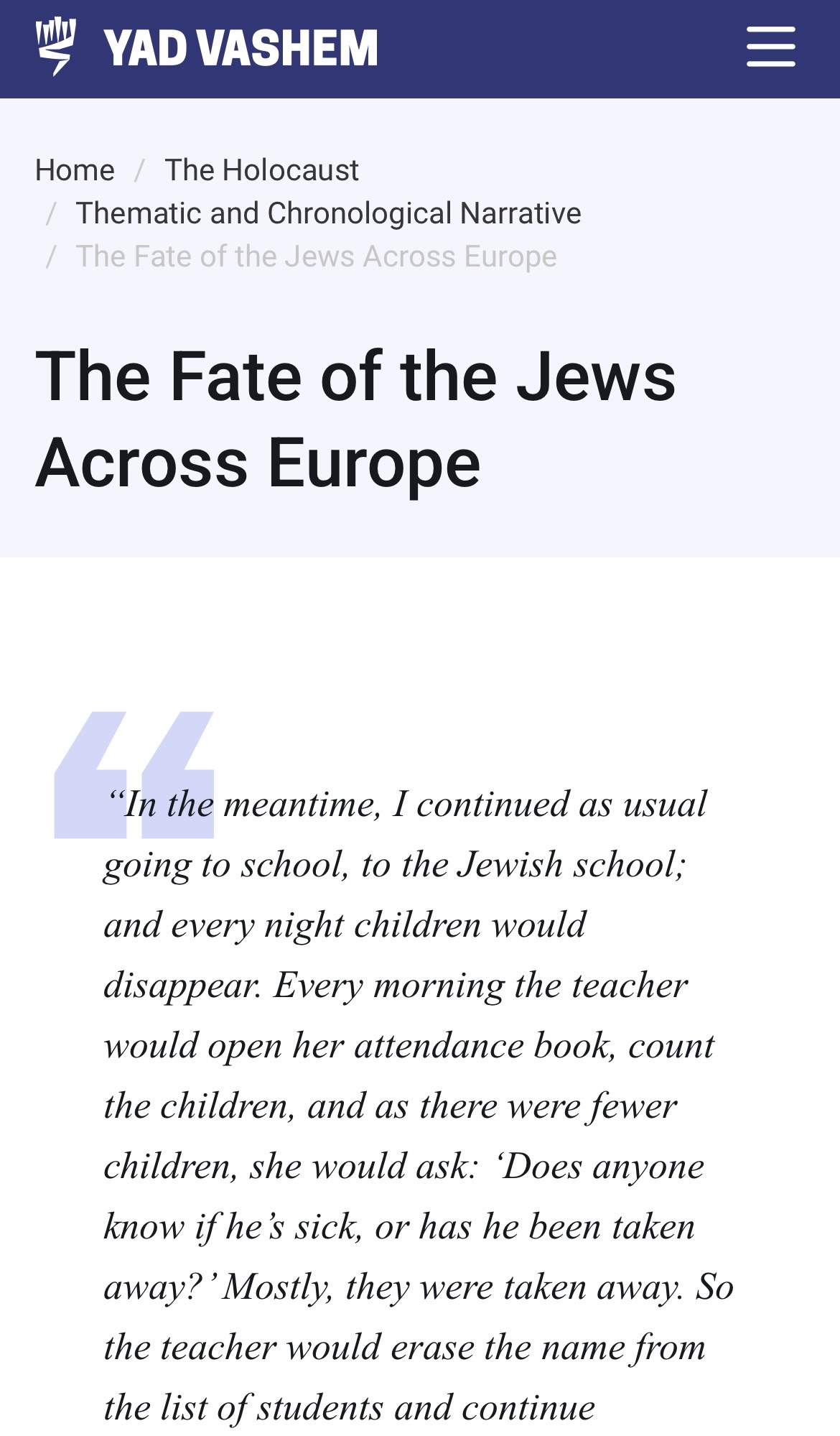
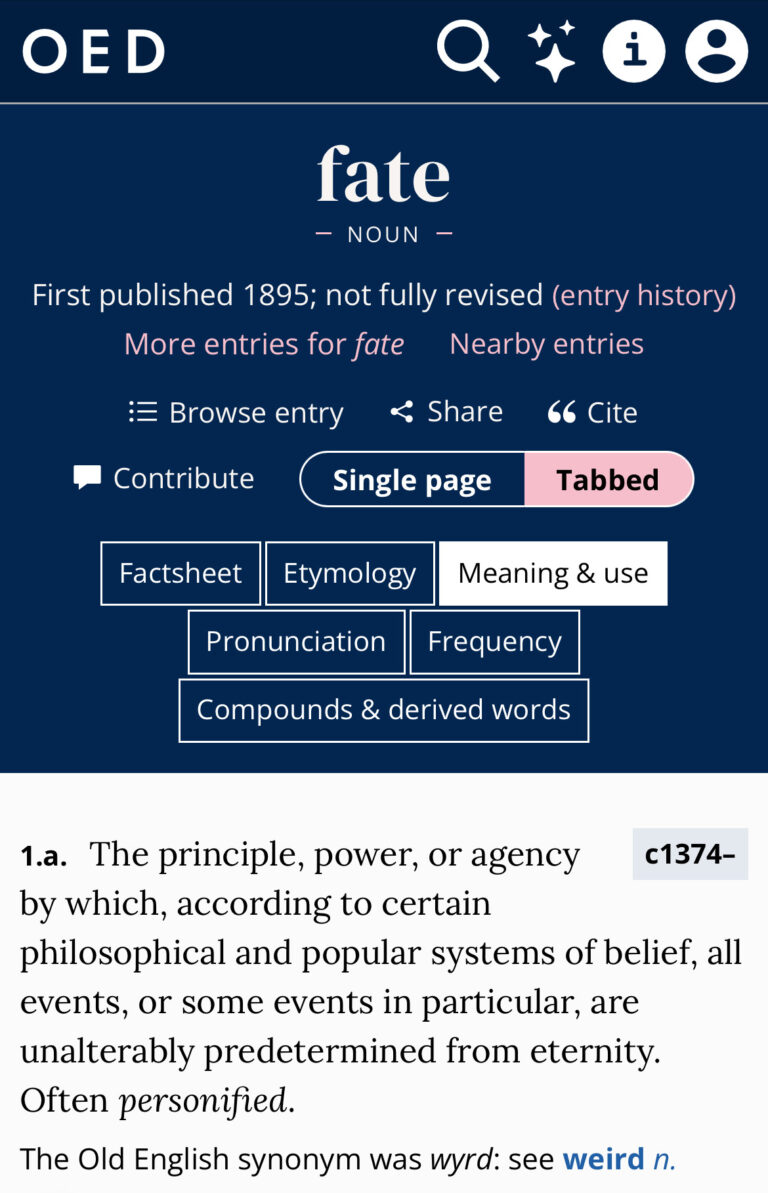
Although the term is widely used in German, it has been criticised. After all, what exactly does ‘fate’ mean?
fate: ‘The principle, power, or agency by which, according to certain philosophical and popular systems of belief, all events, or some events in particular, are unalterably
predetermined from eternity.’
Oxford English Dictionary
Thus, when we talk about the ‘Fate of the Jews’, it sounds like an inevitable, uncontrollable destiny. This obscures the question of responsibility. As a result, however, the fact that people decided on and implemented the persecution and systematic extermination of the Jewish people is not made clear. The Shoah comes across as a crime without perpetrators. It is trivialised.
The exhibition contains many terms that could be perceived as problematic. This is not only because they are misleading, but also because the exhibition has adopted Nazi language from the sources or uses discriminatory designations.
Have you noticed any problematic terms in the audio guide? Or would you like to point out something else in our language?
Since the exhibition opened in 1997, attitudes towards language have sharply changed. Museums are increasingly careful not to use discriminatory terms in their exhibition texts. But what about sources that contain Nazi terminology? Go to the next room! Can you find the document dated 1 April 1933?
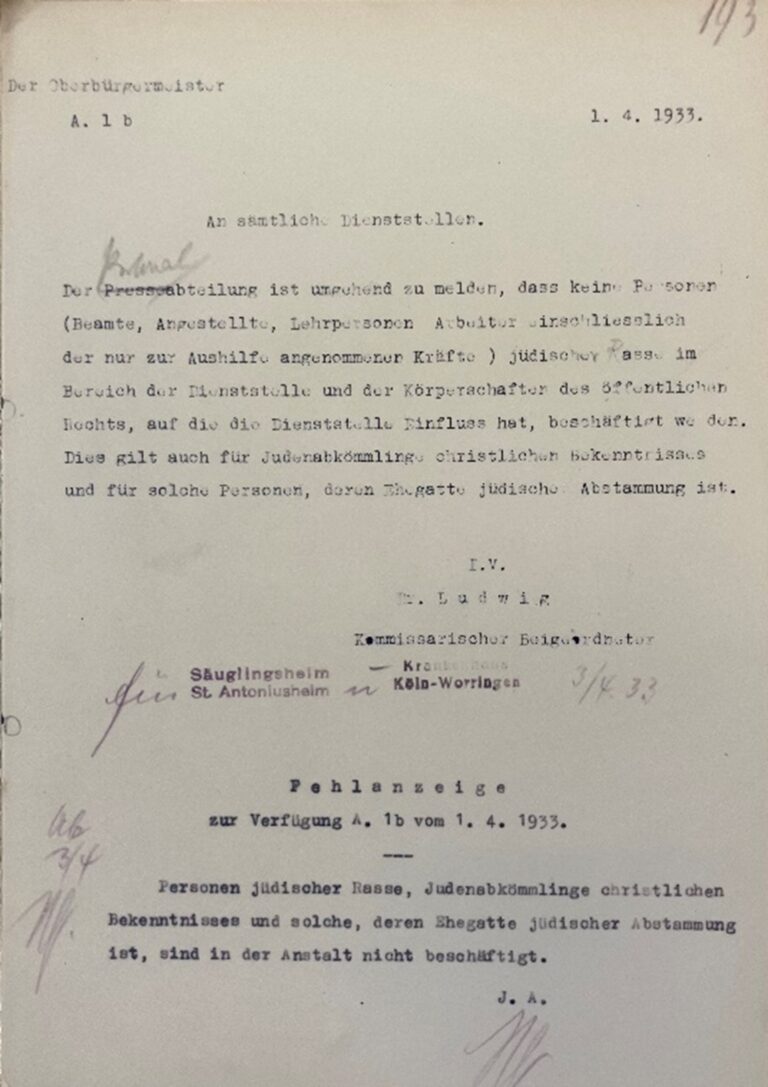
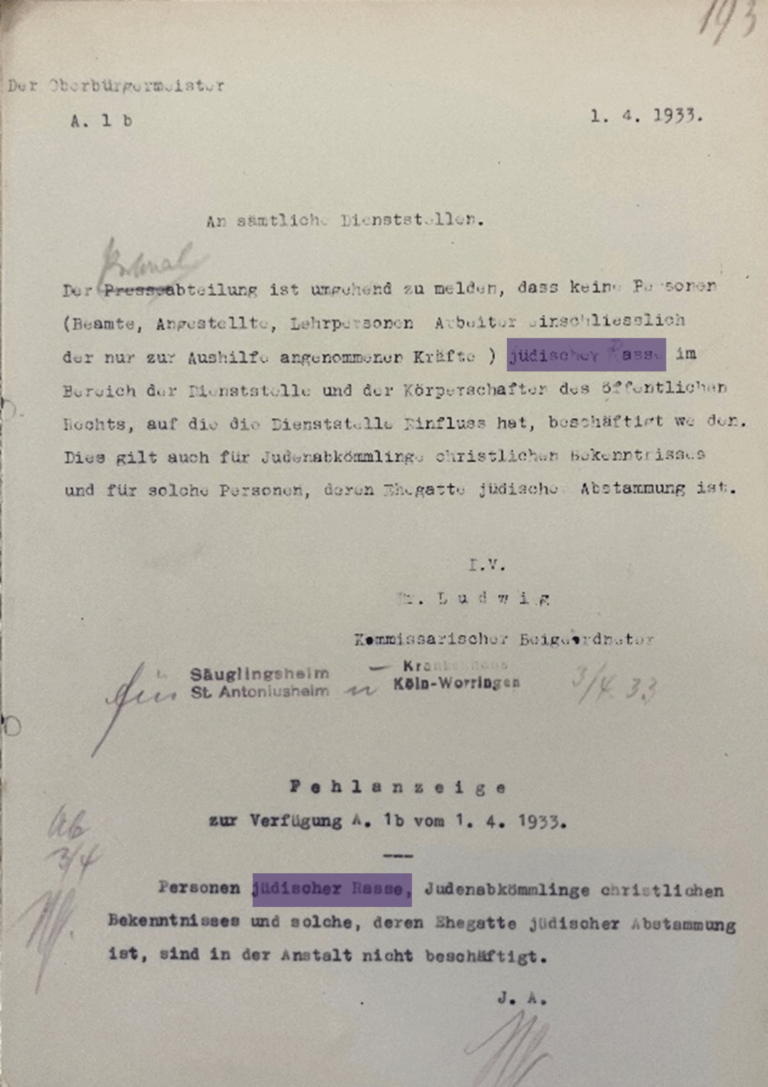
The letter calls on the departments of the Cologne city administration to report Jewish employees. This paved the way for their dismissal from public service. The document also makes it clear who was considered Jewish under National Socialism. The term ‘race’ is used for this purpose.
To this day, the term is associated with the persecution and extermination of people under National Socialism and colonialism. There is broad consensus in Germany not to use the term.
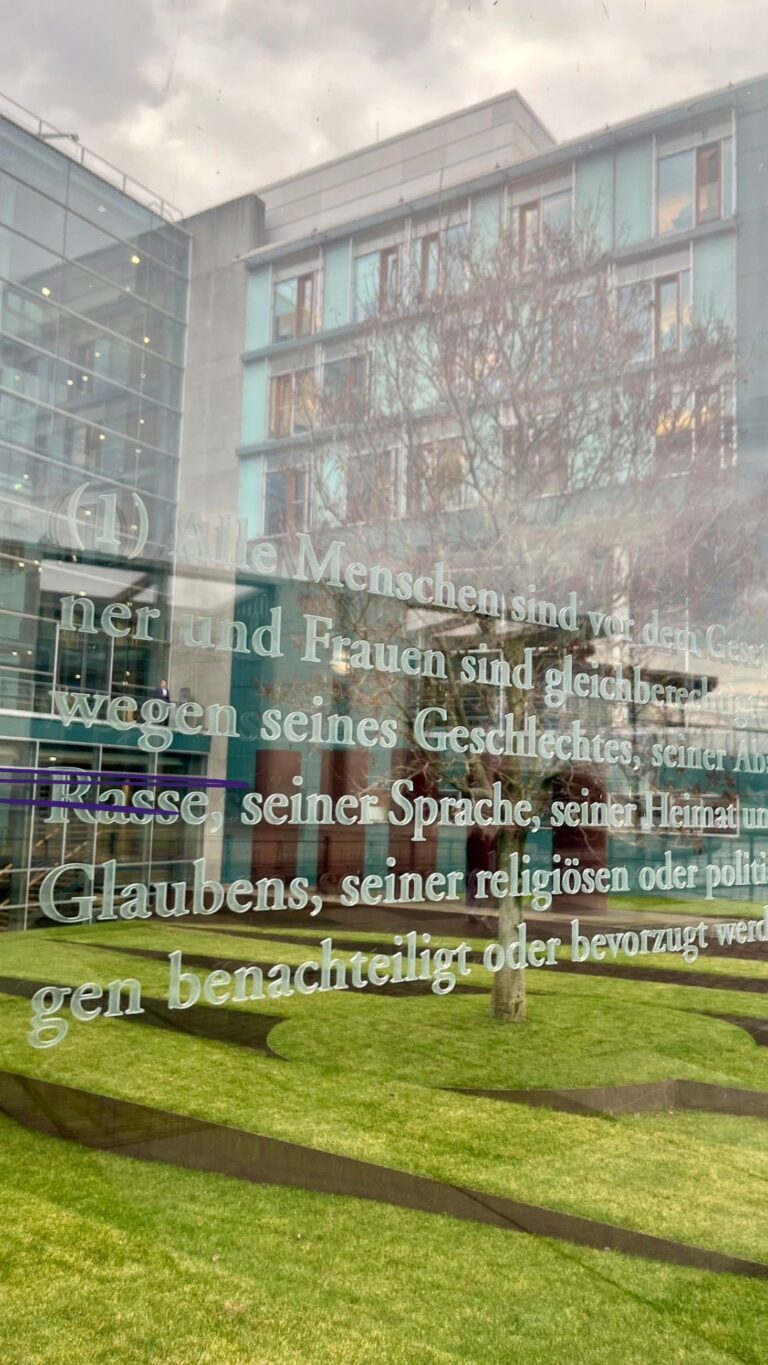
Even in contexts where it is actually intended to prevent discrimination, many people criticise the use of the word.
The German Basic Law states, for example, that no one may be ‘prejudiced or favored because of … his race‘. The article was included in 1949 precisely to prevent the persecution of people as occurred under National Socialism from ever happening again.
And yet, it has been the subject of criticism for several years. People fear that its use in a German legal text lends credence to the racist idea that distinct ‘human races’ actually exist.
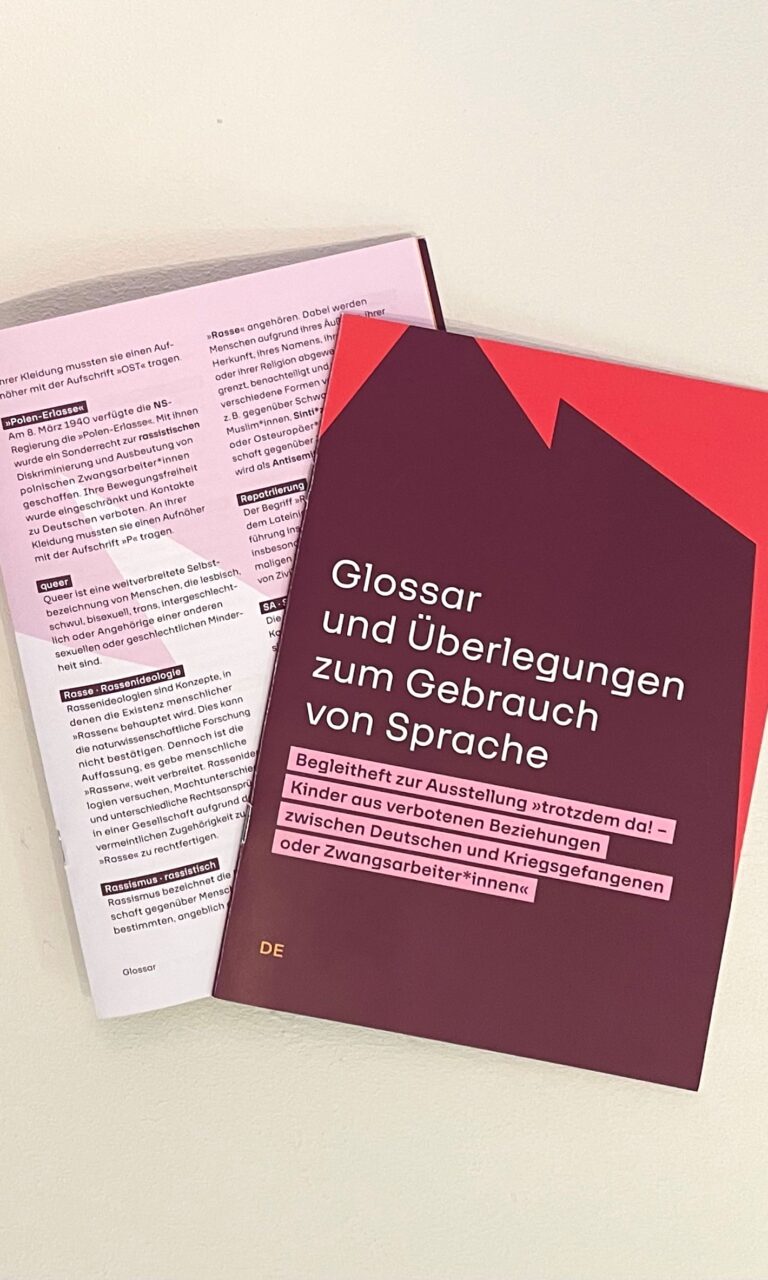
This is also a topic of discussion in museums: the word is omnipresent in many National Socialist documents, and it crops up again and again here in this exhibition, too.
What are the implications of exhibiting sources that use the term ‘race’?
The term already existed before National Socialism. The Nazis radicalised it and used it to justify measures from the deprivation of rights to the systematic murders of the Shoah. The National Socialist understanding of ‘racial theory’ is central to explaining exclusion and persecution.
However, the term is used in the attempt to attribute supposedly immutable biological characteristics to people and thereby hierarchise them. There is no scientific basis for this. Instead, the construct serves to legitimise racism. The idea of ‘races’ still threatens groups of people today. Being confronted with it places a burden on those affected by anti-Semitism and racism.
What do you think? How should this term be handled?
Several answers are possible.
Here’s what you said:
Go two rooms further. There you will encounter a topic that you may already be familiar with from the first floor.
Credits:
1. © NS-DOK / Michael Wiesehöfer; 2.Cologne City Museum, 1988 © NS-DOK / Celia Körber-Leupold; 3. Catalogue Jüdisches Schicksal © NS-DOK; 4. Yad Vashem: The Fate of the Jews Across Europe, URL: https://www.yadvashem.org/holocaust/about/fate-of-jews.html; 5. Oxford English Dictionary: Fate, URL: https://www.oed.com/dictionary/fate_n?tab=meaning_and_use; 6. Letter of the Cologne city administration © HAStK Best. 902, Nr. 157/3, S. 963; 10. German Basic Law at the Parliament of the Federal Republic of Germany © Lille Grashoff; 11. Glossary of the touring exhibition ‘nevertheless here!’ of the Sandbostel Memorial Camp © private